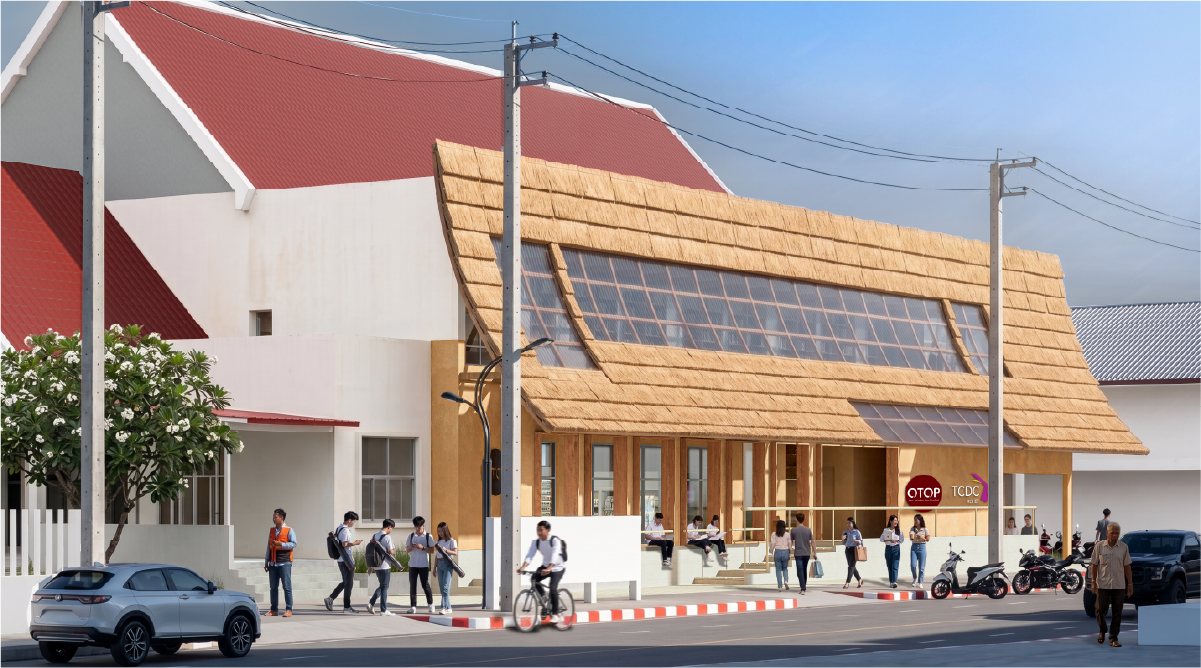
TCDC Roi Et
2025
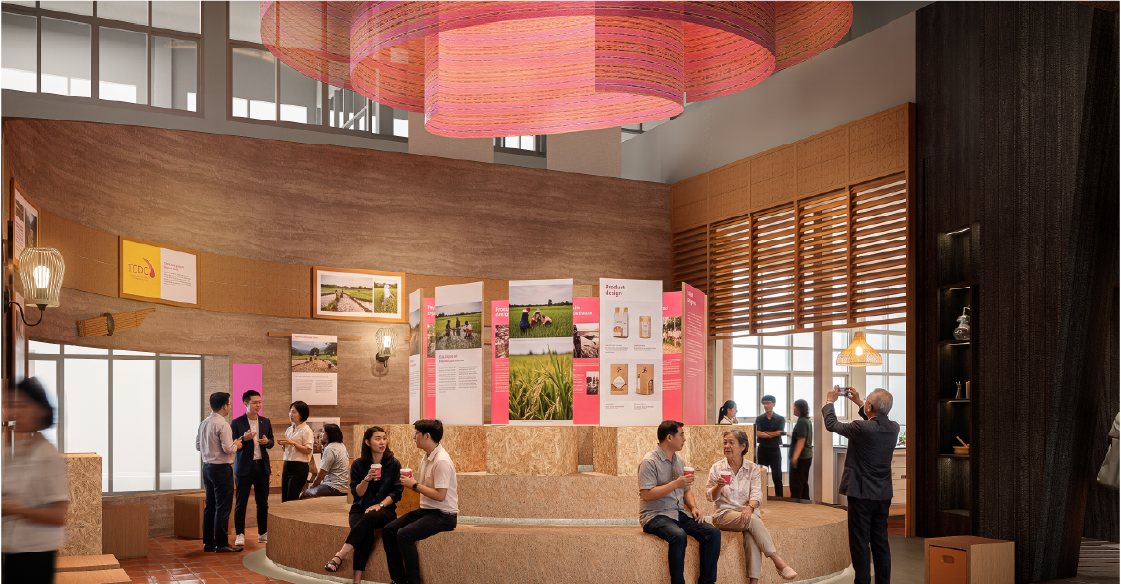
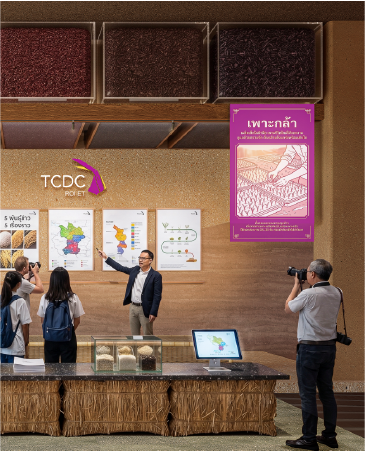
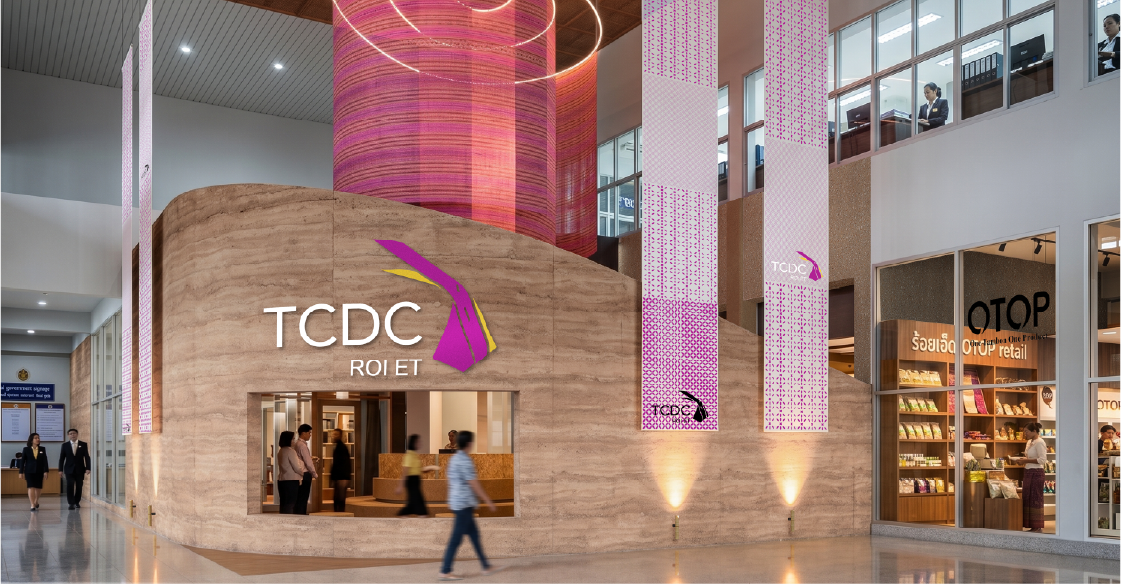
Thung Kula Ronghai produces the jasmine rice that holds the first EU Geographical Indication awarded to any product from Southeast Asia. The land carries its own credential before the building does. TCDC Roi Et is organised around the rice cycle — not as a metaphor, but as a structural principle. Eight zones follow eight stages of cultivation, from seedling to packaged product. Each zone is calibrated to produce a distinct spatial condition: compression in the transplanting corridor, full transparency at the milling stage where refinement becomes visible, and a circular platform at quality control where raw material becomes classified value.
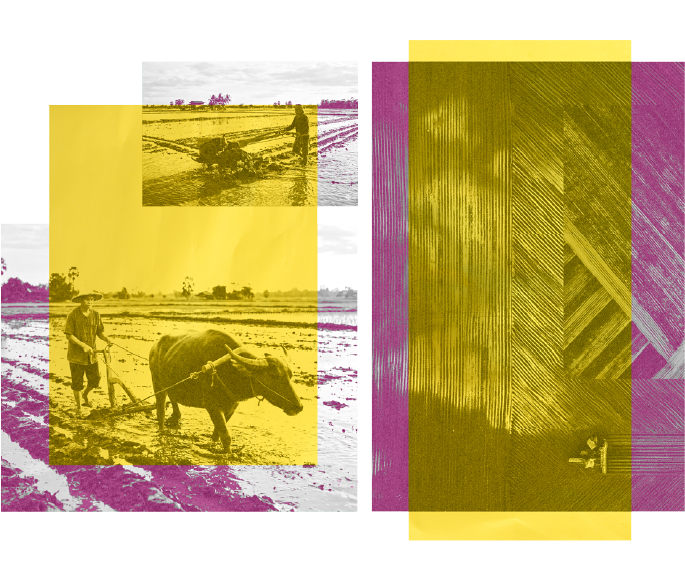
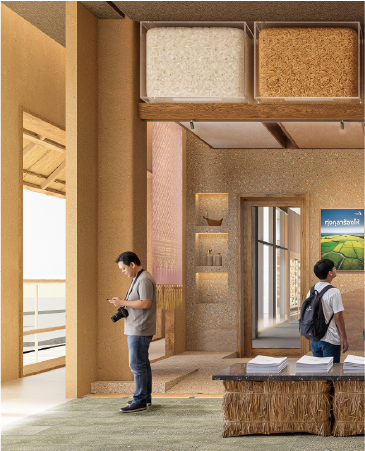
The spatial progression tracks the rice cycle from origin to output. Early zones compress the visitor into narrow corridors lined with rammed earth, replicating the density of a seedbed. As the sequence advances, glass walls open at the milling and processing stages, making the act of refinement visible. The journey concludes at a circular quality-control platform where the grain — now graded and classified — occupies the centre of the room.
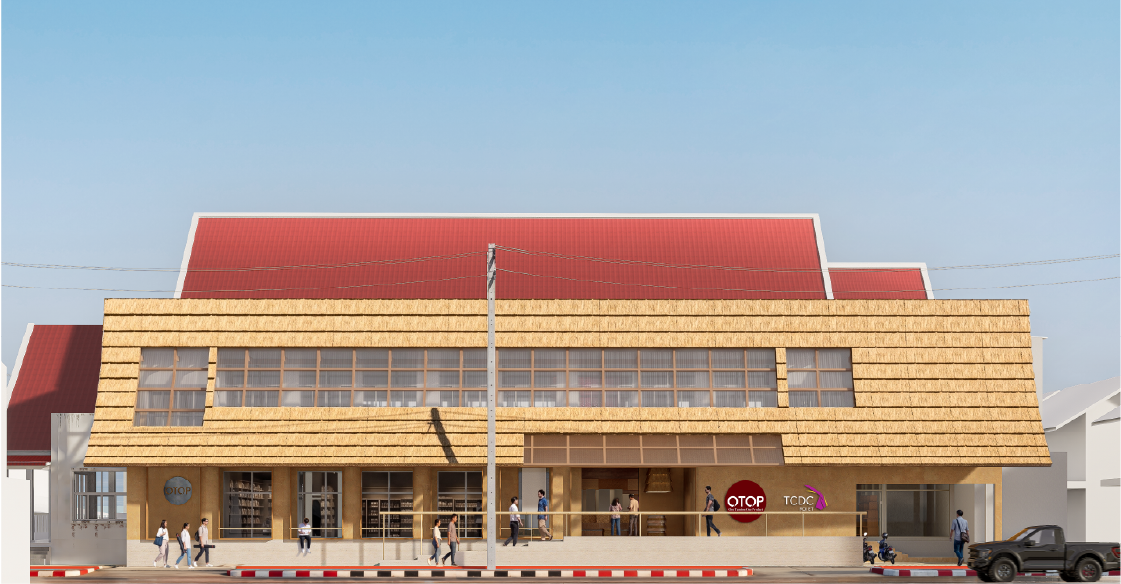
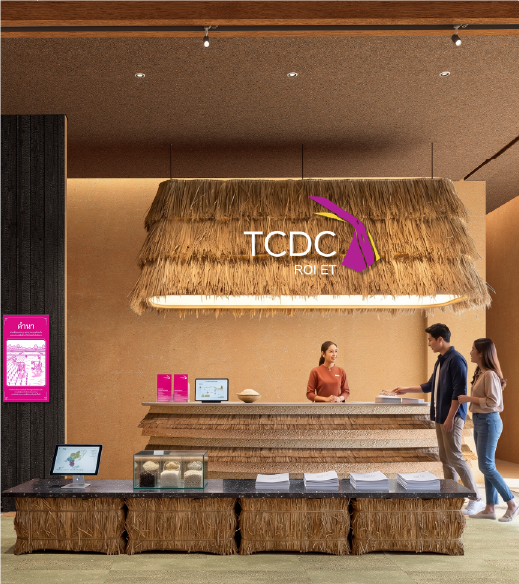
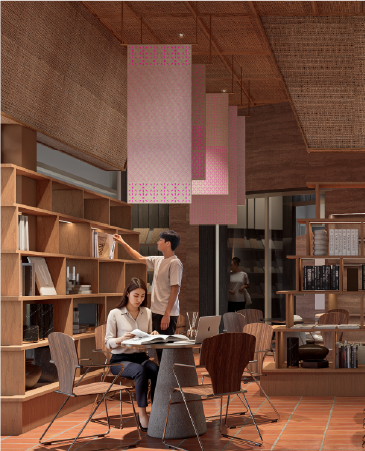
Material selection is not decorative but argumentative. Rammed earth, charred timber, rice straw plywood, and rice husk concrete are placed alongside stainless steel and clear glass. The pairing puts what grows from this soil into direct conversation with how the world receives it. Each material transition corresponds to a shift in the cultivation stage, reinforcing the spatial logic without relying on signage or narrative panels.

Journey through our creative collection


Discuss your project with our design team