Consulting
Project consulting gives the client a clearer way to move through uncertain project decisions.
Some projects do not need more drawings first. They need a clearer brief, a realistic scope, a checked quotation, or an independent reading of what the site and contractor information actually mean.
We work as an owner-side design advisor, helping clients understand options, risks, priorities, and next steps. The role is advisory: we do not act as contractor, supplier, or the party executing the work.
How the consulting work is shaped.
Each consulting scope starts by locating the decision that needs support. From there, we gather evidence, test assumptions, compare options, and translate the findings into a clear recommendation.
We identify what the client needs to decide: brief, scope, budget direction, tender route, contractor response, site issue, or design priority.
Drawings, quotations, site conditions, schedules, contractor notes, and client priorities are reviewed together so the advice is not separated from context.
We compare possible routes against design intent, cost logic, timing, risk, and the level of quality the project needs to protect.
The outcome is a practical direction: what to proceed with, what to revise, what to ask, and what should not be decided too early.
Consulting becomes valuable when a project reaches a point where decisions carry consequence. The work is not to add noise, but to make the situation legible enough for the owner to act.
This section looks at three things consulting should make clearer: scope, risk, and alignment.
Clear scope

A project becomes easier to lead when its scope is visible. We help define what needs to be designed, priced, coordinated, and decided before teams move forward.
Early warnings
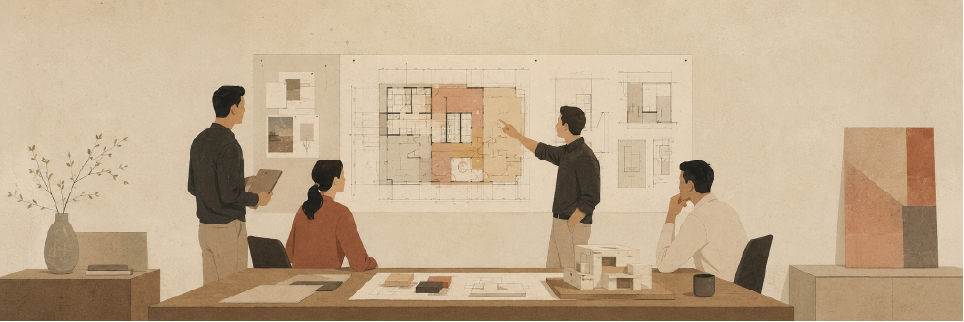
Consulting is often most useful before small assumptions become site issues. We review constraints, drawings, quotations, and responsibilities to show where risk may appear.
Protected intent
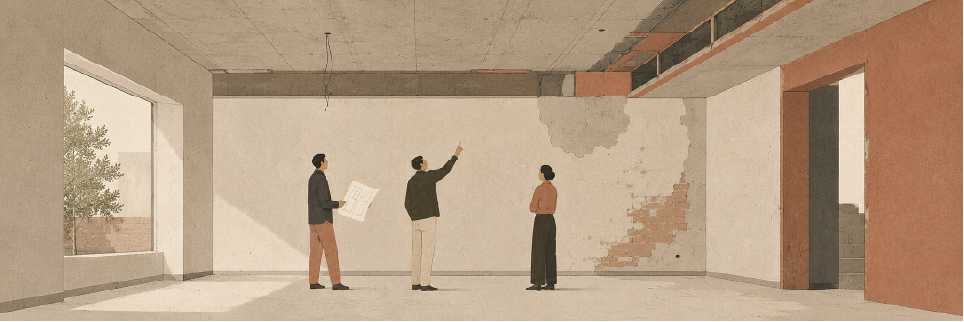
As the project moves from briefing to tender and site, decisions can drift. We keep the work tied to the brief, drawings, budget logic, and the quality the client expects.
Discuss your project with our design team